Short answer
Check five things at once — the business licence (company name and registered scope), the plant and equipment, the production process, the quotation structure, and invoicing and contracting. If all five line up and the supplier is willing to host you on site or on a live video call, it is almost certainly a real factory.
1Check the company name and registered business scope
Start with the business licence, via the national enterprise credit system or a commercial registry lookup. Look at three things: whether the company name says “Manufacturing Co., Ltd.” or “Trading / Commerce / Distribution”; whether the registered scope includes shelving or metal-products manufacturing rather than sales only; and whether it carries a goods import/export licence, which is essential for exporters. Also check the number of insured employees — it reflects real scale, and a “factory” with a handful of insured staff deserves a few more questions.
2Cross-check the registered address against the plant address
A real factory can describe and receive visitors at its production site. Ask for the full plant address, verify plant size and surroundings on satellite maps, and confirm whether the registered address and the production address match. Be cautious if the address is vague or turns out to be an office building.
3Ask for a live video audit, not a promotional video
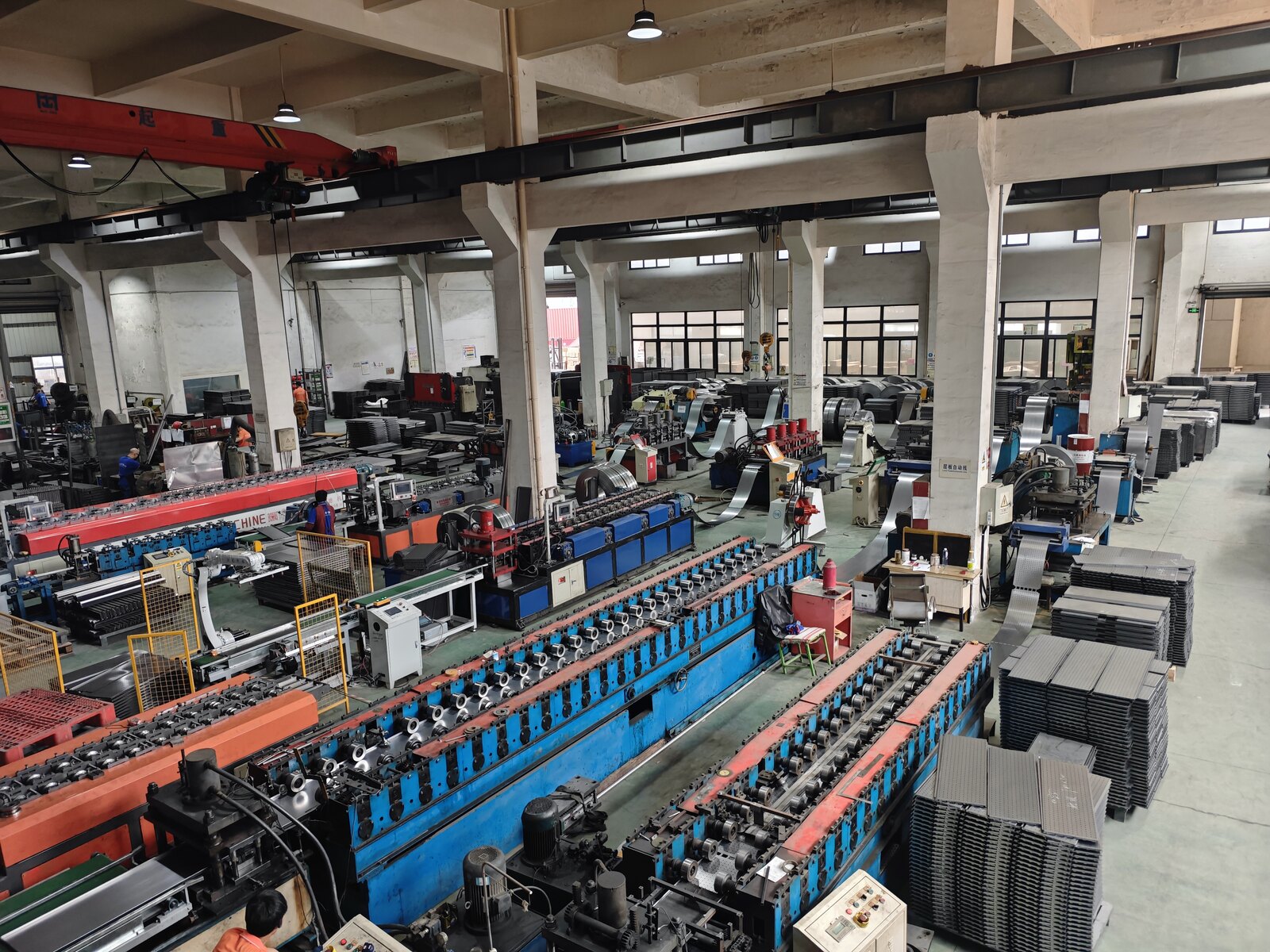
The most reliable way to verify equipment and lines is a live video call. Ask the supplier to walk the roll-forming line, press brake, welding, laser cutting and powder coating line while they are running, in the order you specify, with today’s date or a code word you choose on camera. Promotional films, looped footage and clips found online do not count as a factory audit.
4Confirm the steel grade, thickness and coating process
Shelving quality comes down to material and process, so ask the supplier to put three things in writing before quoting: the steel grade (Q235 cold-rolled steel is common), the actual thickness of uprights and shelf panels, and the surface treatment (pre-treatment plus electrostatic powder coating). Suppliers who can provide mill certificates and test reports — salt spray, coating adhesion — offer more assurance.
5Test whether customisation, sampling, lead time and production are transparent
A real factory is confident about customisation and delivery. Ask: can you customise size, colour and load capacity to our drawings; how long does a sample take; what are the lead times for stock and custom orders; can we track production progress and get photos or video at container loading. Vague answers, or “it depends” for every lead time, are a warning sign.
6Read the structure of the quotation
A factory quotation states the essentials: dimensions, steel thickness, load capacity, accessories, packaging, freight, installation and after-sales. A single total price with no thickness or load capacity cannot be compared. Compare several quotes at the same specification and thickness, and if one is far cheaper, ask whether the material has been thinned down.
7Confirm invoicing, payment and contract
A legitimate factory collects payment into a corporate account whose name matches the business licence, and issues invoices. For exports it can also supply commercial invoice, packing list, bill of lading and similar documents. The contract should state the warranty period and after-sales responsibility. A request to pay into a personal account is a reason to walk away.
8Factory vs. trading company at a glance
- Business licence: A real factory’s name includes “Manufacturing” and its scope covers shelving or metal products. If the name says Trading / Commerce and the scope is sales only, ask more questions.
- Plant & equipment: A real factory shows running lines on live video. Promotional video or web images only is a warning sign.
- Quotation: A real factory states thickness, load, accessories, packaging and freight. A total price only, suspiciously low, is a warning sign.
- Custom & sampling: A real factory customises to drawings with a clear sampling period. Stock models only with vague lead times calls for caution.
- Invoicing & payment: A real factory uses a corporate account matching the licence and issues invoices. A request for a personal account transfer is a reason to walk away.
9Is buying through a trading company always a bad deal?
No. Trading companies and local distributors suit small volumes, urgent orders, and purchases that need local installation and after-sales. For larger volumes, custom projects or exports, going direct to the factory usually gives more control over price, quality and lead time. The key is knowing who you are dealing with, then choosing according to your order size.
10Our verification information (check it yourself)
Everything below can be checked directly, and you are welcome to walk the plant:
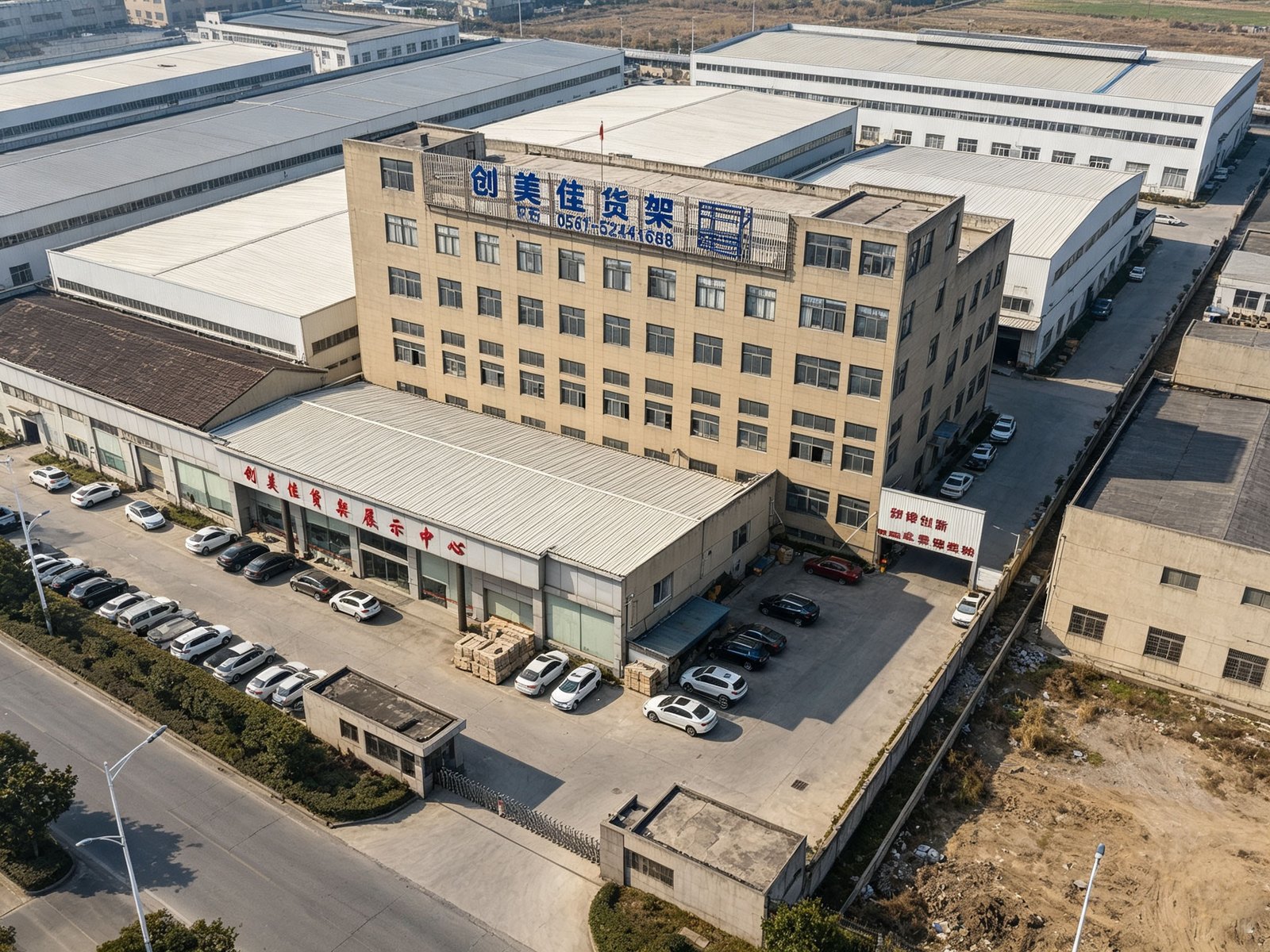
- Legal entity: Suzhou Chuangmeijia Metal Products Manufacturing Co., Ltd. — No. 160 Liantang Avenue, Shanghu Town, Changshu, Jiangsu, China
- Scale: 29,800 m² of own factory space, 200+ staff, 30+ years of shelving manufacturing
- Equipment: 16 fully automated integrated roll-forming lines, 20 CNC press brakes, 6 automatic welding machines, 4 laser cutters, 3 automatic powder coating lines
- Material & process: Q235 cold-rolled steel, pre-treatment plus electrostatic powder coating
- Certifications: ISO9001, ISO14001, ISO45001, CE, RoHS
- Export: shipped to 80+ countries and regions; commercial invoice, packing list, bill of lading and certificate of origin available
- MOQ & lead time: from 1 set; stock shipped in 48 hours, custom orders in 7–10 days
- Factory visits: on-site visits welcome, live video audits by appointment
11FAQ
- How do I tell a shelving factory from a trading company? Check five things at once: the business licence (name and scope), the plant and equipment, the production process, the quotation structure, and invoicing and contracting. If all five line up and the supplier will host you on site or on a live video call, it is almost certainly a real factory.
- Which parts of the business licence matter most? Most important are whether the name says “Manufacturing Co., Ltd.”, whether the scope includes shelving or metal-products manufacturing, the incorporation date, the number of insured employees, and whether a goods import/export licence is included.
- How do I avoid being fooled by a promotional video during a remote audit? Require a live call and have the supplier film the running roll-forming, welding and coating lines in the order you set, with today’s date or a code word you choose visible on camera.
- Is it always a bad deal to buy from a trader? Not necessarily. For small volumes, urgent orders and local installation or after-sales, a distributor is often more convenient. For large volumes, custom work or exports, going direct to the factory is usually more controllable.
- What verification documents can you provide? Business licence, ISO9001 / ISO14001 / ISO45001 certificates, CE and RoHS certificates, and project-specific test reports such as SGS. On-site visits and live video audits are both welcome.